Countertops

Countertops

Wooden countertops

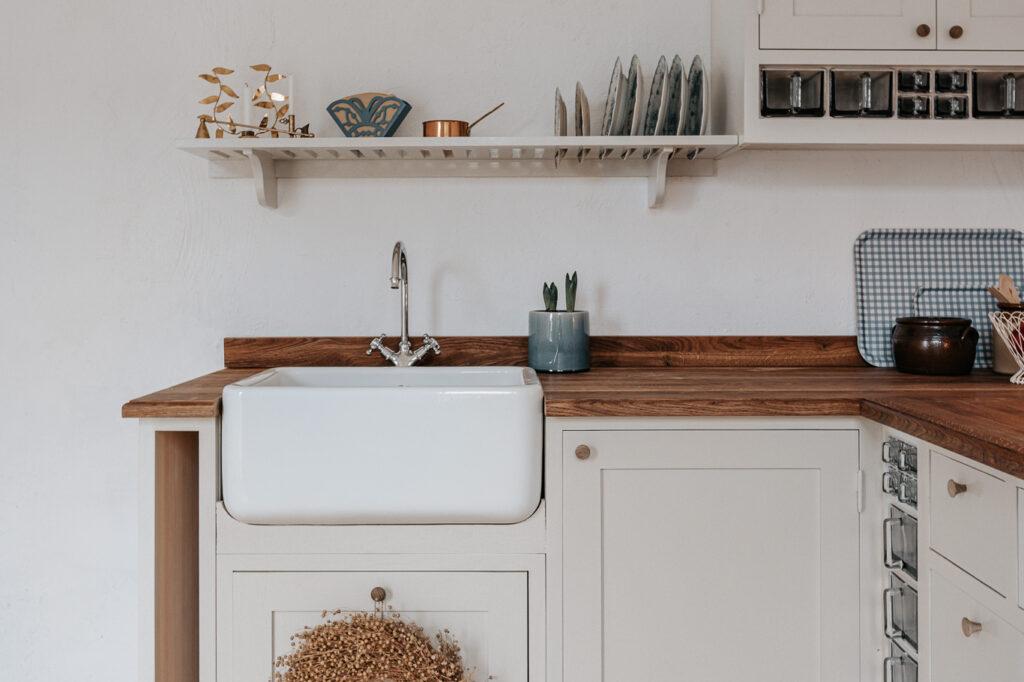
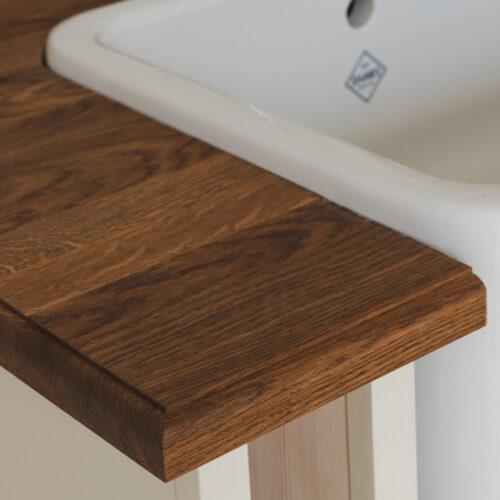
We offer our own oak countertops. Typical thickness is usually 20 mm or 30 mm. They are made of whole plates and not glued together bars. If you wish, you can add a back border. The example above shows a 20 mm thick oak benchtop with an approximately 60 mm high back edge strip.

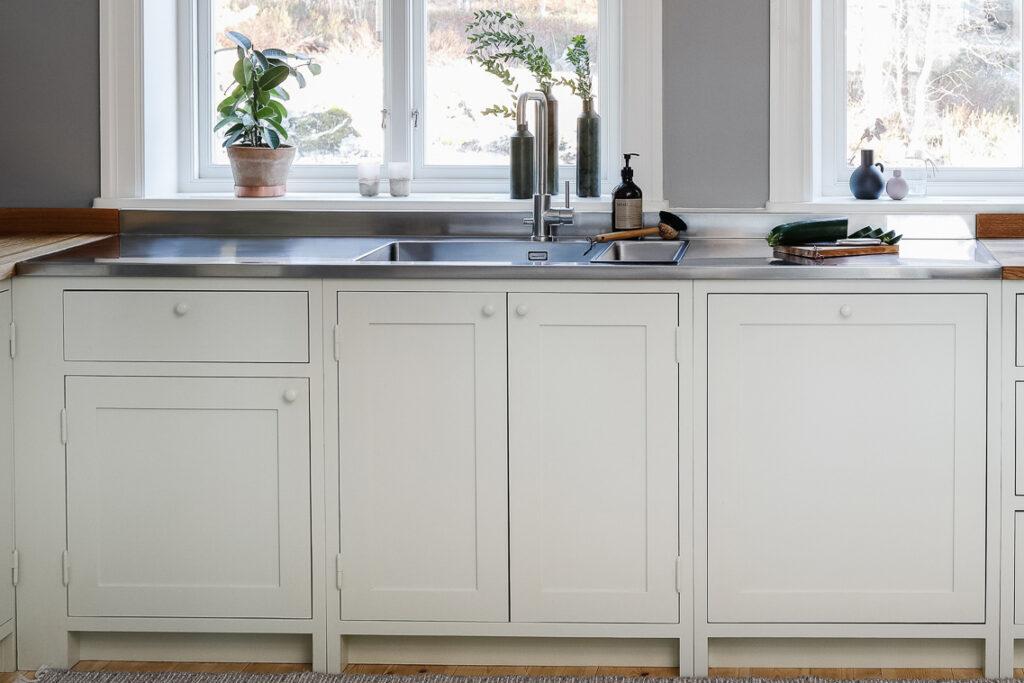
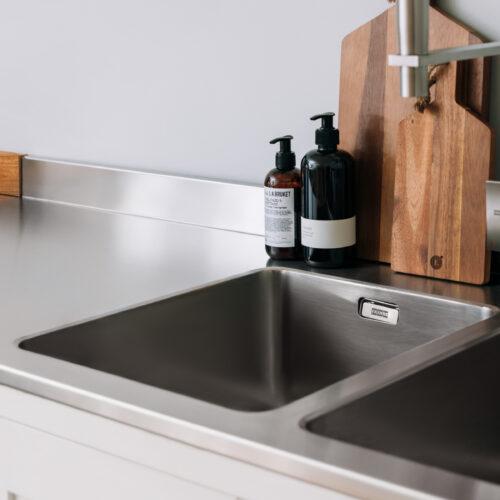
An example of an oak countertop combined with a stainless steel countertop and sink.

Stainless steel countertops

We offer our own oak countertops. Typical thickness is usually 20 mm or 30 mm. They are made of whole plates and not glued together bars. If you wish, you can add a back border. The example above shows a 20 mm thick oak benchtop with an approximately 60 mm high back edge strip.

Please see this fine example of how an oak countertop has been combined with a stainless steel sink: Shaker kitchen in Gothenburg.

Stone countertops

When it comes to stone countertops, we recommend that you contact your nearest, local, stonemason.

The process is usually smooth and you can most likely get a price quote using the kitchen drawing you create with us. After the kitchen is assembled, a technician will come and measure the countertop to make sure all the dimensions are correct so that it fits perfectly. When the countertop is ready, it is delivered and installed for you.

A selection of countertops

Wood

Oak

An oak worktop offers a durable, hard-wearing and aesthetically pleasing solution for the kitchen. Oak is a hard wood that can withstand daily wear and tear and has a warm, natural feel. The main advantage is that it can be sanded and re-oiled several times, giving it an extremely long lifespan.
We can offer our own oak countertops. They are made from whole boards and not glued together bars.
If you wish, you can add a back edge strip. We can also offer a beautiful profile on our own oak countertops.

See kitchens with oak countertops here:

Stainless steel

Stainless steel sink

It was during the 1930s that stainless steel sinks began to be manufactured and were introduced as a luxurious and modern solution.
Stainless steel was seen as the ultimate material for the kitchen, as it was easy to keep clean and resisted corrosion (a chemical or electrochemical process in which metals break down and “eat away” by reacting with their surroundings, usually oxygen and moisture).

See kitchen with stainless steel sink here:

Marble

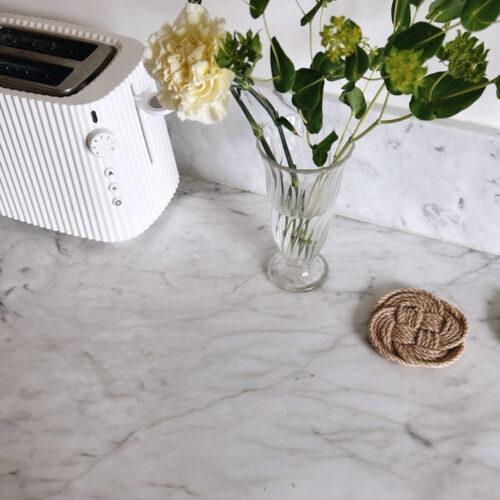
Bianco Carrara​

Marble is a type of crystalline limestone that forms when limestone undergoes metamorphosis (transformation) under high pressure and temperature in the Earth’s crust. This process recrystallizes the calcite, giving the stone its characteristic, often “sugary” texture and pattern.
Carrara marble has a predominantly white to light gray background with gray veining that varies from thin streaks to heavy areas. Pure marble is white, but impurities produce different colors and patterns. Marble is relatively soft and sensitive to acid. Carrara C comes from the quarries around the city of Carrara in central Italy.

See kitchen with Carrara Marble countertop here:

Limestone

Varying shades

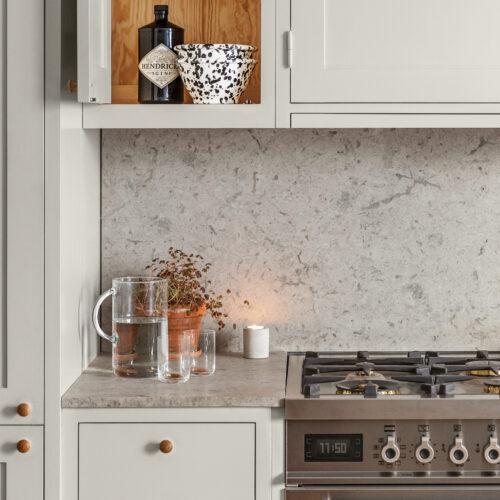
Limestone is suitable for most purposes and is a classic choice. The color of the limestone depends on where the stone was quarried and what minerals (e.g. clay, sand, iron, manganese) or organic substances are present in the stone. In addition, surface treatments and polishing can affect how the color is perceived. due to their visible fossils.

Quartzite

Varying shades

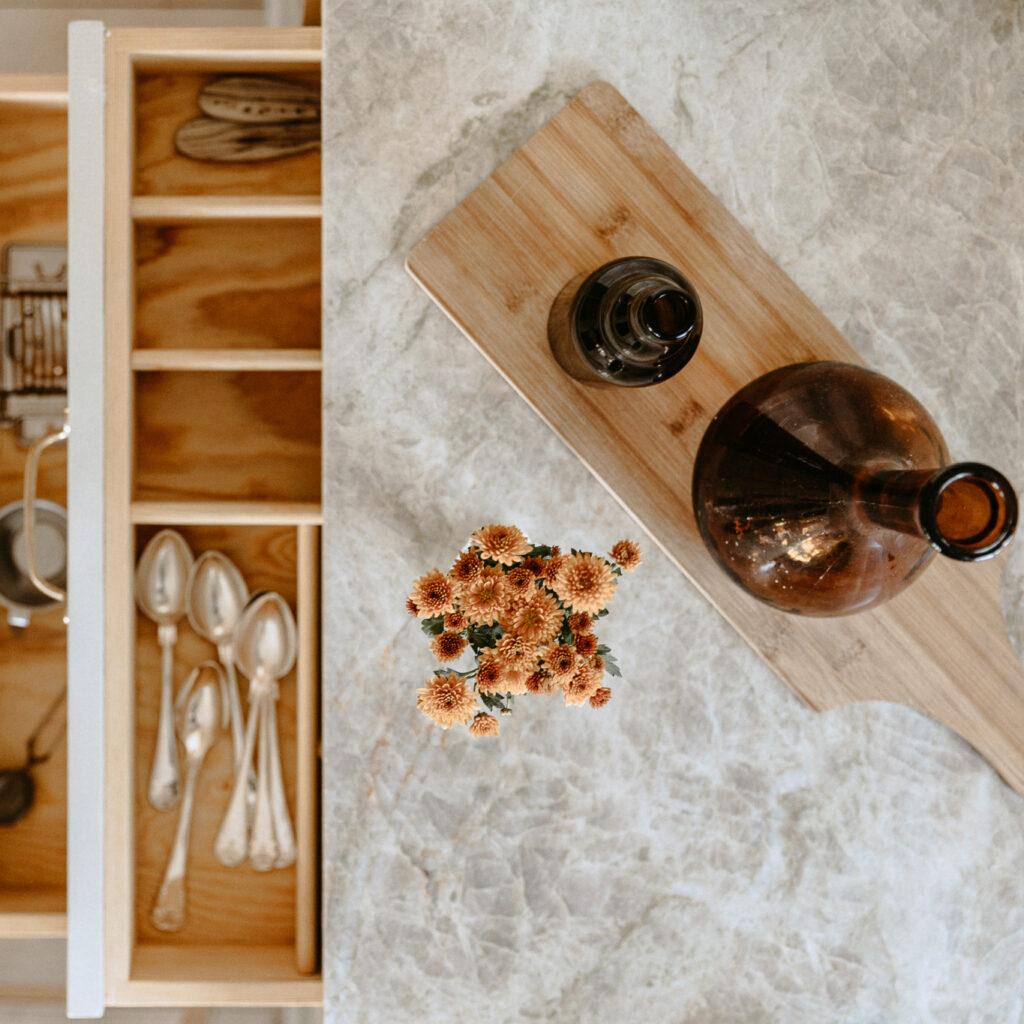
Quartzite is an excellent material for kitchen countertops due to its extreme hardness, wear resistance and heat resistance, which surpasses both granite and marble. It is a natural stone that combines the exclusive appearance of marble with the durability of granite, is scratch-resistant, stain-resistant (if sealed) and provides a unique, natural aesthetic.

Taj Mahal is quarried in Brazil. This quartzite has a soft, white background and subtle, golden veins. The stone stands out precisely for its thin and dramatic features in gold.

See kitchens with the Quartzite countertop here:

General things to consider when choosing a countertop:

  • Materials. Which material suits your needs?
  • Dimensions. Which thickness? 20 mm or 30 mm are most common. How much do you want the worktop to protrude at the front and sides?
  • With or without a back strip?
  • Don’t forget to choose the right dimensions if you combine different types of worktops so that the working height is the same.